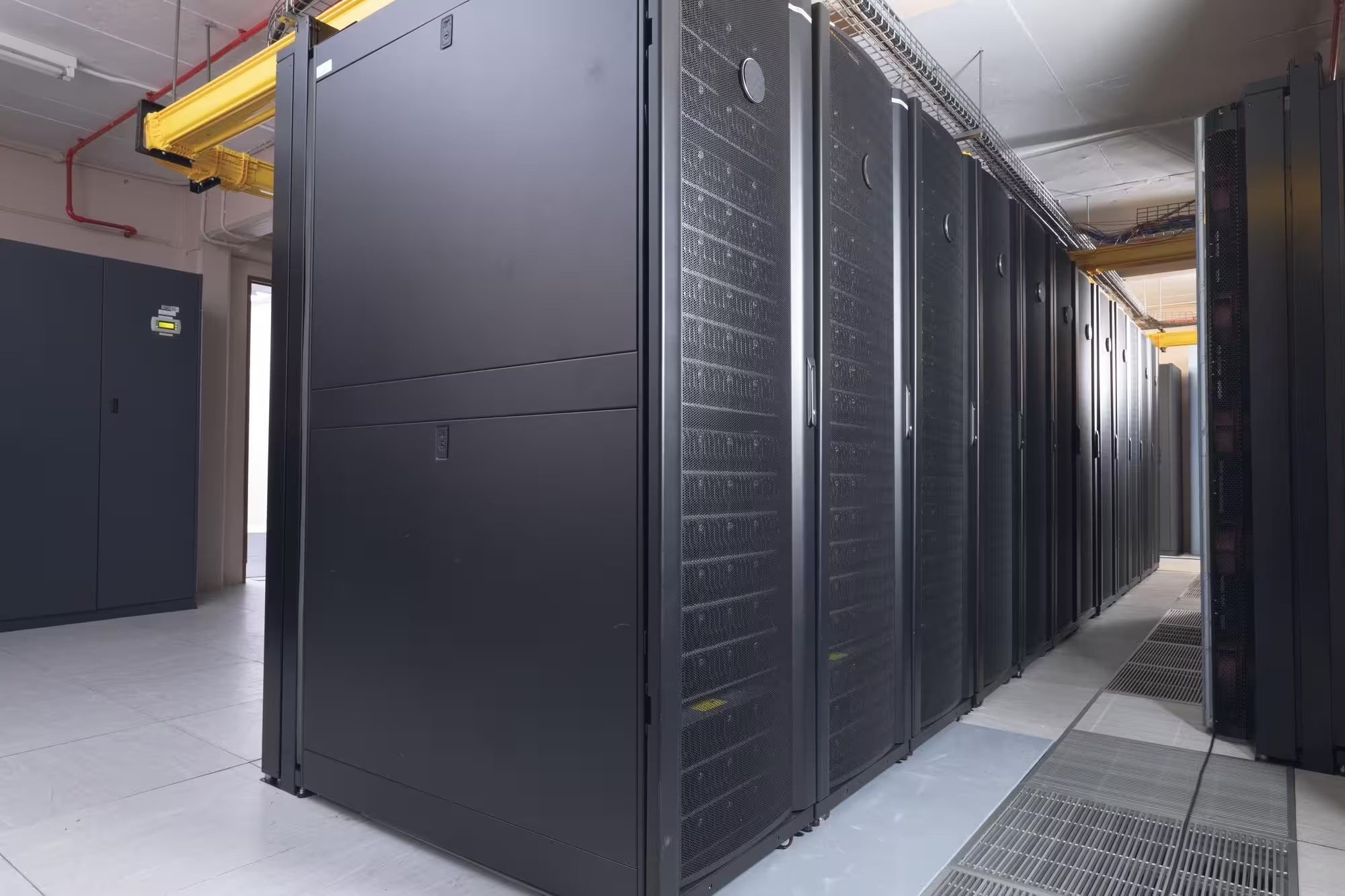
We delivered a turnkey build‑out of a new row of 8–9 racks, covering power and airflow engineering, cabinet assembly, structured cabling, full labeling, and test validation. The scope included documentation, port books, and handover materials that allow operations to troubleshoot quickly without vendor dependency.
Client. Campus expansion program, adding a new compute/network row in a live environment
Context
The client’s campus had reached power density and cabling limits in the existing rooms. Growth in application workloads and an upcoming office move required additional capacity without disrupting production. Maintenance windows were limited to weekends, and safety rules for anchoring, hot/cold aisle containment, and cable routing were strictly enforced by facilities.
Challenge
- Introduce new capacity with no impact to services sharing the same power and pathways
- Control thermal hotspots while increasing density and keeping noise and airflow within spec
- Establish a repeatable labeling and documentation standard to reduce MTTR after handover
- Fit the entire build into three weekend windows, with measurable quality gates
Approach
We used a phased weekend plan with clear exit criteria: 1) Rack placement/anchoring, ladder rack tie‑in, and preliminary PDU layout. 2) Copper/fiber backbones, patch panels, and structured cable dressing with QA checkpoints. 3) Device mounting, patching, validation, and documentation freeze. Each wave ended with a joint walkthrough and punch‑list sign‑off.
We aligned intake/exhaust and blanking to preserve pressure differentials, and pre‑built labeling templates (circuits, U‑positions, panel/port maps) to standardize cabinet books.
Implementation
- Power and airflow: dual PDUs per cabinet, load balancing, and thermal probes. Cold‑aisle containment adjusted; average cabinet temperature improved by −4°C under load.
- Cabling: Cat6A for copper and OM4 for fiber trunks; all terminations inspected and dressed with radius control. Ladder rack and vertical managers ensured clear separation and service loops.
- Patch panels and devices: switches/routers mounted with documented U‑heights; port maps mirrored in the runbooks. All panels labeled to TIA‑606‑B conventions.
- Validation: Fluke DSX for copper and OTDR for fiber. 100% PASS criteria, with remediation handled within the same window. Photos and test reports archived with cabinet books.
Outcomes
- Zero unplanned downtime during and after cutover; access controls and monitoring stayed fully operational
- 100% PASS across copper and fiber links; improved thermal profile (−4°C) and cleaner airflow
- Standardized labeling and documentation reduced post‑handover mean‑time‑to‑resolve by an estimated 22%
- Capacity created for future expansion without rework; ladder rack and PDUs sized for growth
Business impact
- Added capacity without service impact; reduced MTTR thanks to labeling and cabinet books
- Improved thermal profile (−4°C) lowers risk and supports denser future growth
- Clear runbooks and QA gates improved vendor coordination and made future changes predictable
- Asset‑linked photo evidence sped up audits and reduced troubleshooting time
Operations and handover
We delivered cabinet books with port maps, PDU assignments, and airflow notes, plus photo evidence tied to asset IDs. Runbooks defined QA gates, torque specs, and remediation steps for future adds/moves/changes, enabling consistent results without on‑site vendor support.
Timeline
Three consecutive weekends with pre‑staged materials, nightly QA, and Monday morning verification. Punch‑list items were closed in‑week, avoiding carry‑over into the next window.
Technology
Enterprise switches/routers, Cat6A/OM4, Fluke DSX, OTDR, ladder rack/cable managers, labeling system (TIA‑606‑B)