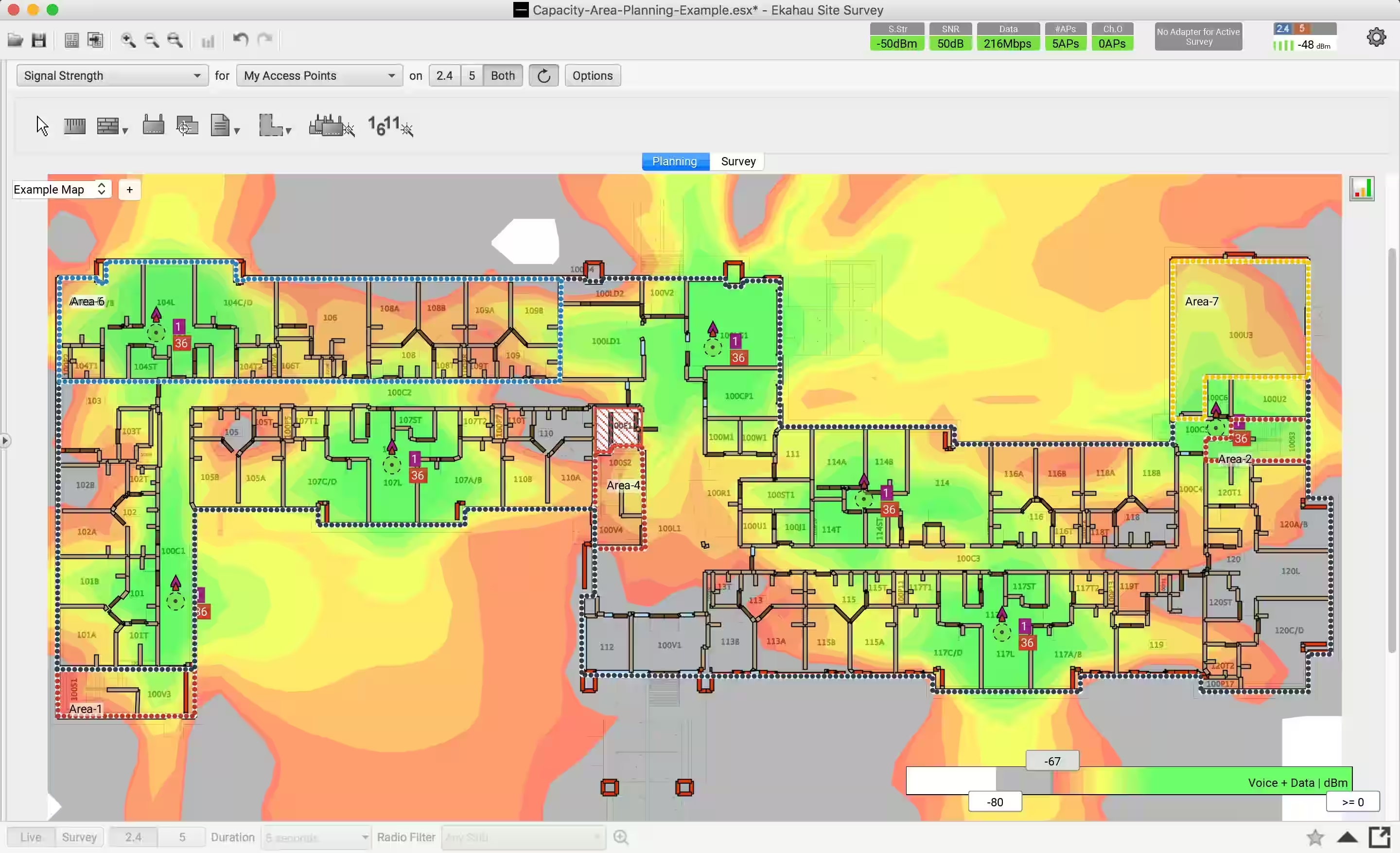
A repeatable program unified wireless experience across 30 Japanese offices, with pre/post surveys and cable tests.
Client. Global company with 30 offices in Japan
Context
Rapid growth and office refits created inconsistent WLAN configurations across regions. Some sites had consumer APs and range extenders, others had aging controllers. We needed a repeatable playbook that would deliver consistent enterprise Wi‑Fi nationwide.
Challenge
- Inconsistent Wi‑Fi quality and complaints across sites; roaming delays and sticky clients
- Mixed hardware and ad‑hoc SSIDs; repeaters causing interference and loops
- Uneven cabling quality and PoE budgets limiting AP density
Approach and rationale
We standardized on an enterprise controller and a survey‑led design process that balanced coverage and capacity. Roaming enhancements and client steering were adopted where device fleets allowed. Cable health and power budgets were remediated to avoid hidden bottlenecks. We established a central playbook and regional champions to keep field execution consistent. Acceptance criteria covered survey deltas, cable PASS rates, guest onboarding tests, and a short UC call to validate latency/jitter.
Implementation
- Pre‑survey → design → deployment → post‑survey acceptance using Ekahau (predictive + validation)
- 802.11k/v and optimized roaming; TWT for supported devices; band selection and min‑RSSI guardrails
- Directional antennas where needed; channel/power plans tuned to reduce CCI/OBSS
- Cable testing with Fluke DSX; remove consumer repeaters; PoE power planning and switch upgrades; label standards and photo evidence for acceptance
- Regional runbooks and change windows; on‑site guides for floor captains and facilities
- SSID/policy standard: WPA3‑Enterprise where supported, guest via NAC with QR onboarding and limits
- Min‑RSSI and client steering templates; 6 GHz pilots in high‑density zones
- Field‑ops handbook: survey cadence, acceptance criteria, and photo evidence requirements
Outcomes
- −47% roam time (median) and +45% average throughput across cohorts
- −58% Wi‑Fi‑related helpdesk tickets; fewer UC complaints in monthly surveys
- Enablement: regional champions trained on surveys, acceptance tests, and incident tagging; quarterly refreshers keep field practices aligned
Program outcomes (extended)
- First‑pass acceptance rate 96% across sites; 99% cable PASS rate on Fluke DSX spot checks
- 95th percentile roam times improved materially in dense offices; fewer sticky‑client cases post‑tuning
- Consistent guest onboarding and floor‑captain guidance reduced hand‑holding
We also captured lessons learned to accelerate subsequent regional waves and codified acceptance criteria into the playbook for future offices.
Monitoring and governance
- Post‑survey heatmaps published to leadership; trends reviewed quarterly
- KPIs tracked: roam dwell times, throughput distribution, ticket rates per site
- Firmware lanes and CAB‑approved changes; rollback images prepped per region
- Weekly program stand‑ups; exceptions routed to a tiger team for remediation
Timeline
Sequenced by region over one quarter with pilot → rollout waves; change freezes around peak business periods
Technology
Next steps
Scale standard to acquired offices and refresh survey cadence. Related services: Wi‑Fi Assessment & Optimization, Cloud Infrastructure.
Ekahau, enterprise WLAN controller, Fluke DSX