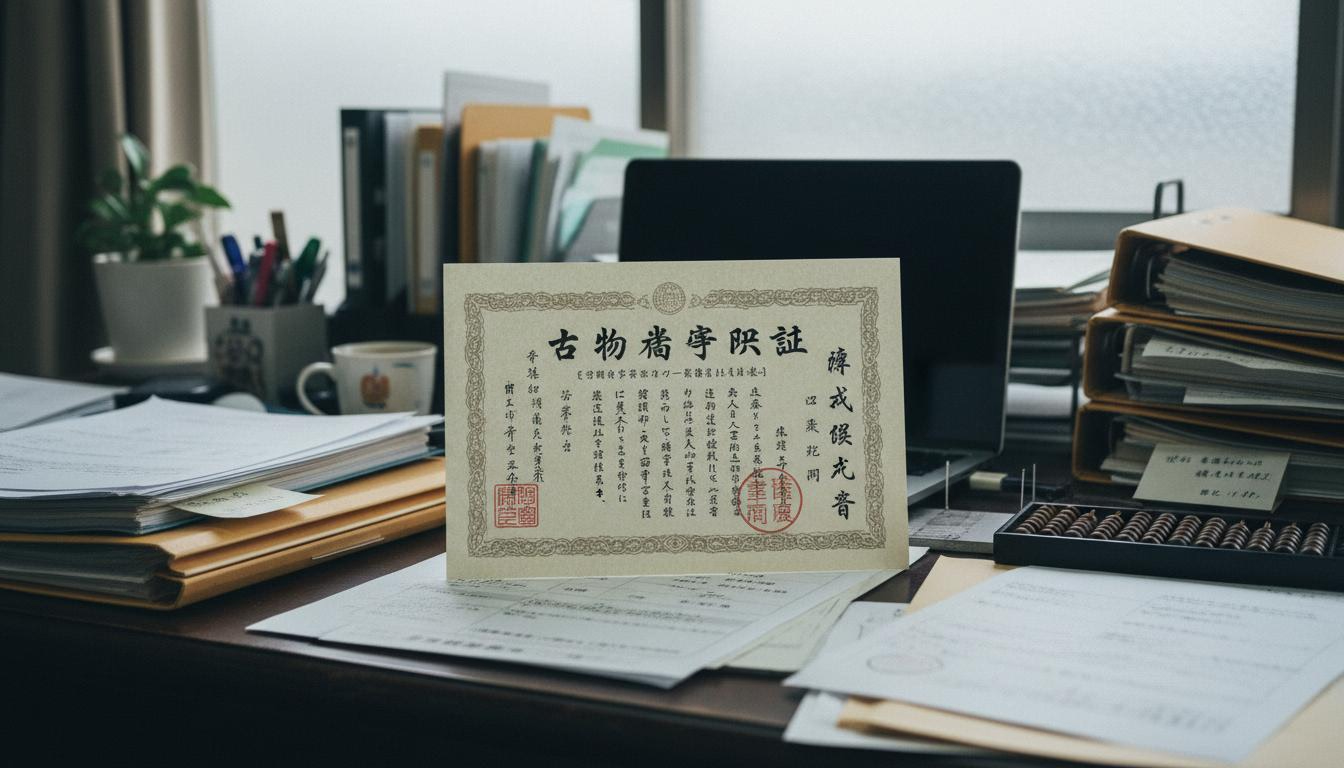
When a European pharmaceutical company retired 150 laptops from their Tokyo office in 2025, they selected an IT recycling company that offered an attractive price and promised environmentally responsible processing. Six months later, Japanese authorities contacted them with troubling news: the recycling company was operating without a kobutsusho kyoka (古物商許可), or secondhand goods dealer license, and was under investigation for illegal handling of used electronics. As the source of the equipment, the pharmaceutical company faced questions about their due diligence and potential liability for facilitating illegal activity. This scenario illustrates a critical but often overlooked aspect of IT Asset Disposition in Japan: the legal requirement that any business handling used electronics for resale or recycling must hold a kobutsusho kyoka. Working with an unlicensed provider doesn't just create compliance risk—it can expose your organization to legal liability, data breach risk, and reputational damage. This guide explains what the kobutsusho kyoka is, why it matters for ITAD, how to verify a provider's license, the risks of working with unlicensed operators, and how proper licensing enables legitimate asset recovery and value return.
What Is Kobutsusho Kyoka (Secondhand Goods Dealer License)?
The kobutsusho kyoka is a license required under Japan's Secondhand Articles Dealer Law (古物営業法, Kobutsu Eigyo Ho) for any business that deals in used goods. While the law was originally enacted in 1949 to prevent the fencing of stolen goods, it applies broadly to any business that purchases, sells, or brokers used items—including electronic equipment.
Legal Basis and Requirements
The Secondhand Articles Dealer Law requires licensing for any business that engages in the "purchase or sale of secondhand articles as a business." This includes:
- Purchasing used equipment for resale
- Selling used equipment on behalf of others (consignment)
- Dismantling used equipment for parts or materials recovery
- Brokering transactions involving used goods
The law defines "secondhand articles" broadly to include virtually all tangible goods, with specific categories including electronics, office equipment, and computer hardware. There is no exemption for business-to-business transactions or for equipment that will be recycled rather than resold. To obtain a kobutsusho kyoka, a business must:
- Register with the prefectural public safety commission (警察署) where their business is located
- Submit an application including business details, owner information, and intended scope of operations
- Undergo a background check to ensure the applicant has no criminal history that would disqualify them
- Pay the required licensing fee (typically ¥10,000-20,000 depending on the prefecture)
- Display the license at their place of business
The license specifies the types of goods the dealer is authorized to handle and the location where operations may be conducted. A license for "office equipment" or "electronics" is required for ITAD operations.
Types of Licenses and Their Scopes
Kobutsusho kyoka are categorized by the types of goods the dealer is authorized to handle. For ITAD providers, the relevant categories include:
---
Related Articles
- ITAD Japan: Complete Guide to Secure IT Asset Disposition
- NIST 800-88 Japan: Data Sanitization Compliance Guide
- Secure Data Wiping Japan: Methods and Compliance
---