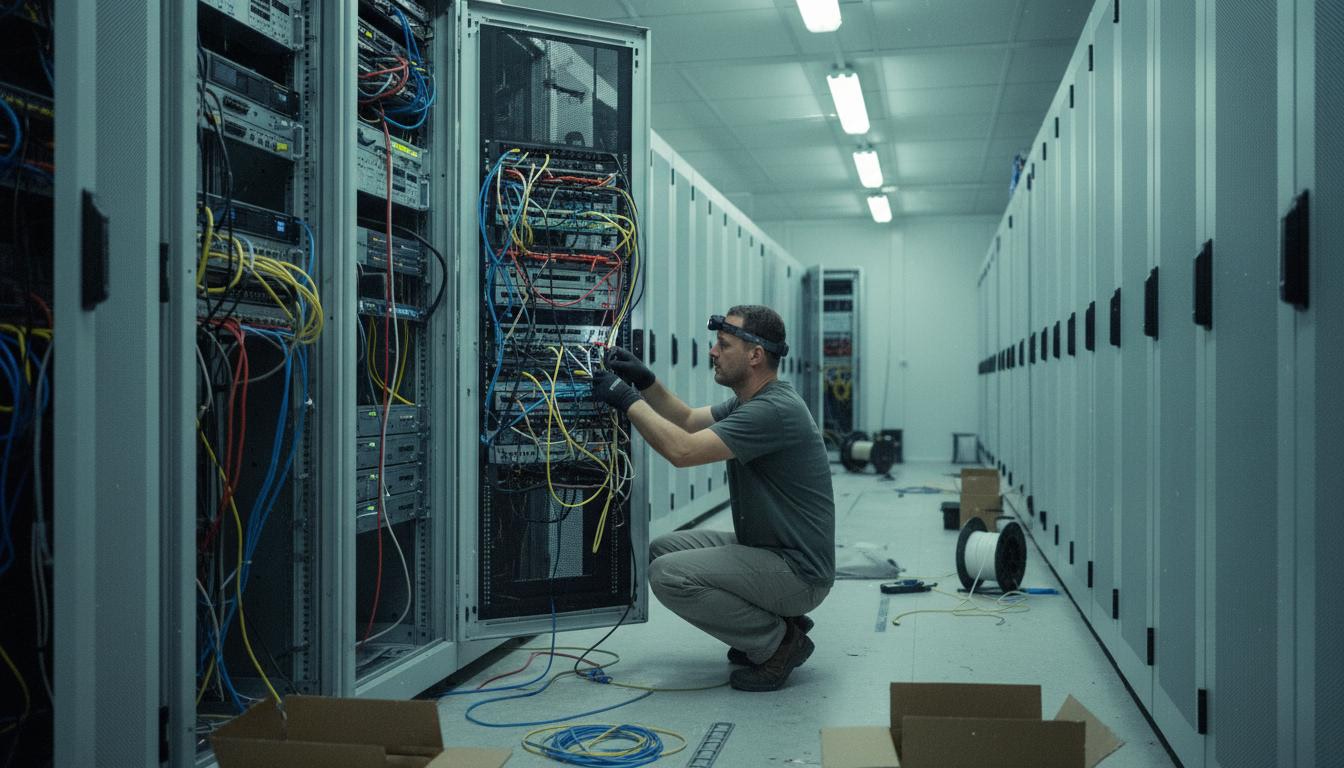
When a European fintech company established their Japan headquarters in Tokyo in 2025, they used the same network equipment as their London office. Six months later, they faced significant performance issues. Connectivity routed through European concentrators was painfully slow from Tokyo. Network switches didn't integrate with the building's infrastructure. Their preferred cloud provider had limited Japan presence with poor latency. They spent ¥15 million redesigning portions of their infrastructure—more than the original build-out.
This illustrates a critical lesson: global standards need local adaptation. Japan's unique telecommunications landscape, vendor ecosystem, and regulatory environment create requirements that don't exist in Europe or North America.
Planning Infrastructure
For 50-person offices: initial costs ¥8-15M, monthly ¥500,000-1M. Build 15-20% contingency. Allow 3-4 months planning to go-live.
Network Architecture
Internet: Fiber optic via NTT/KDDI/SoftBank (4-6 week lead time, ¥30,000-100,000/month).
LAN: Hierarchical switch architecture with VLANs; 50-person office needs 100+ ports.
Wireless: WiFi 6 with WPA3 and 802.1X. Conduct professional survey for larger offices.
Security: Next-generation firewall, segmentation, endpoint protection.
Cabling: Category 6A with proper testing and certification.
Server Room Design
Space/power: 10-20 sq m; plan for redundancy with dual power feeds.
Cooling: Adequate capacity with fire suppression and physical access control.
Racks: 42U standard with hot/cold aisle; plan 30-50% growth.
Backup: Implement 3-2-1 backup (3 copies, 2 media, 1 offsite). Define RTO/RPO.
Vendor Selection
Popular vendors: NTT East has extensive Tokyo coverage; KDDI and SoftBank are competitive alternatives for ISP. Cisco leads in networking; Aruba and Juniper are strong competitors. Dell EMC, HPE, and Lenovo are popular for servers and storage.
Deployment
Deploy in phases: core infrastructure → servers → wireless → end-user devices. Conduct unit, integration, performance, security, and user acceptance testing before go-live.
Tokyo-Specific Considerations
Secure racks with seismic-rated equipment. Implement UPS and generator backup. Tokyo uses 100V, 50Hz with hot summers—ensure adequate cooling. Maintain bilingual documentation and vendor support.
---
About AKRIN
AKRIN K.K. is a Tokyo-based managed IT services company specializing in IT infrastructure design and deployment for international companies establishing offices in Japan. Contact us for a free infrastructure consultation.
---
Related Articles
- Office Move IT Support Japan: How to Minimize Downtime
- IT Relocation Tokyo: Complete Checklist for Office Technology Moves
- Ekahau Wireless Survey Japan: Professional WiFi Assessment
---